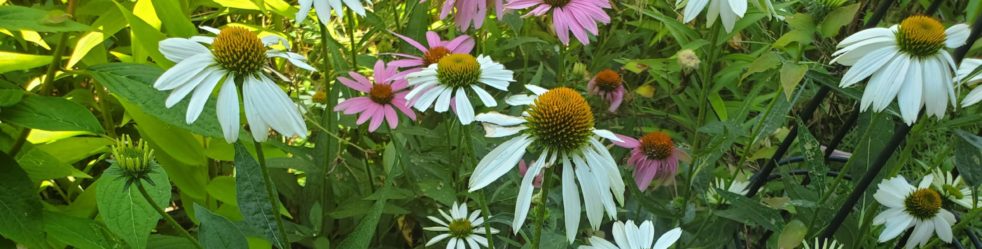
Nothing is brighter or more uplifting on a cool spring morning then to gather cut flowers to bring inside. You can have luscious bouquets by growing hardy annuals yourself from seed. Most hardy annuals need to be started from seed as they are not usually available for purchase at you garden centers. It’s easier then you think!
So what exactly is a hardy annual; it’s a plant that completes its life cycle in a year’s time and thrives in cool weather. The annuals whole goal is to grow, flower and set seed all in one year. Once the annual has set seed, that’s it. Some hardy annuals can be started in late summer to early fall, it overwinters and in the spring produces the earliest of flowers. You can also start hardy annuals from seed in late winter in your garage or other cool spot. Germination of some of the seeds are are low as 45 degrees Fahrenheit.
You will need a few things in order to start growing hardy annuals from seed:
- Seeds! 😉
- Containers to sow your seeds such as peat pots or Jiffy 7’s
- Tray to contain your seedlings and water
- Clean spray bottle with water
- Grow lights
- Larger pots may be necessary to “pot up” your seedlings
- Seed starting media if not using Jiffy 7’s
Some cool annuals to start from seed that make good cut flowers are:
- Bachelor’s buttons
- Snapdragons
- Iceland poppies
- Stock
- Sweet peas
- Chinese Forget-me-nots
- Honeywort
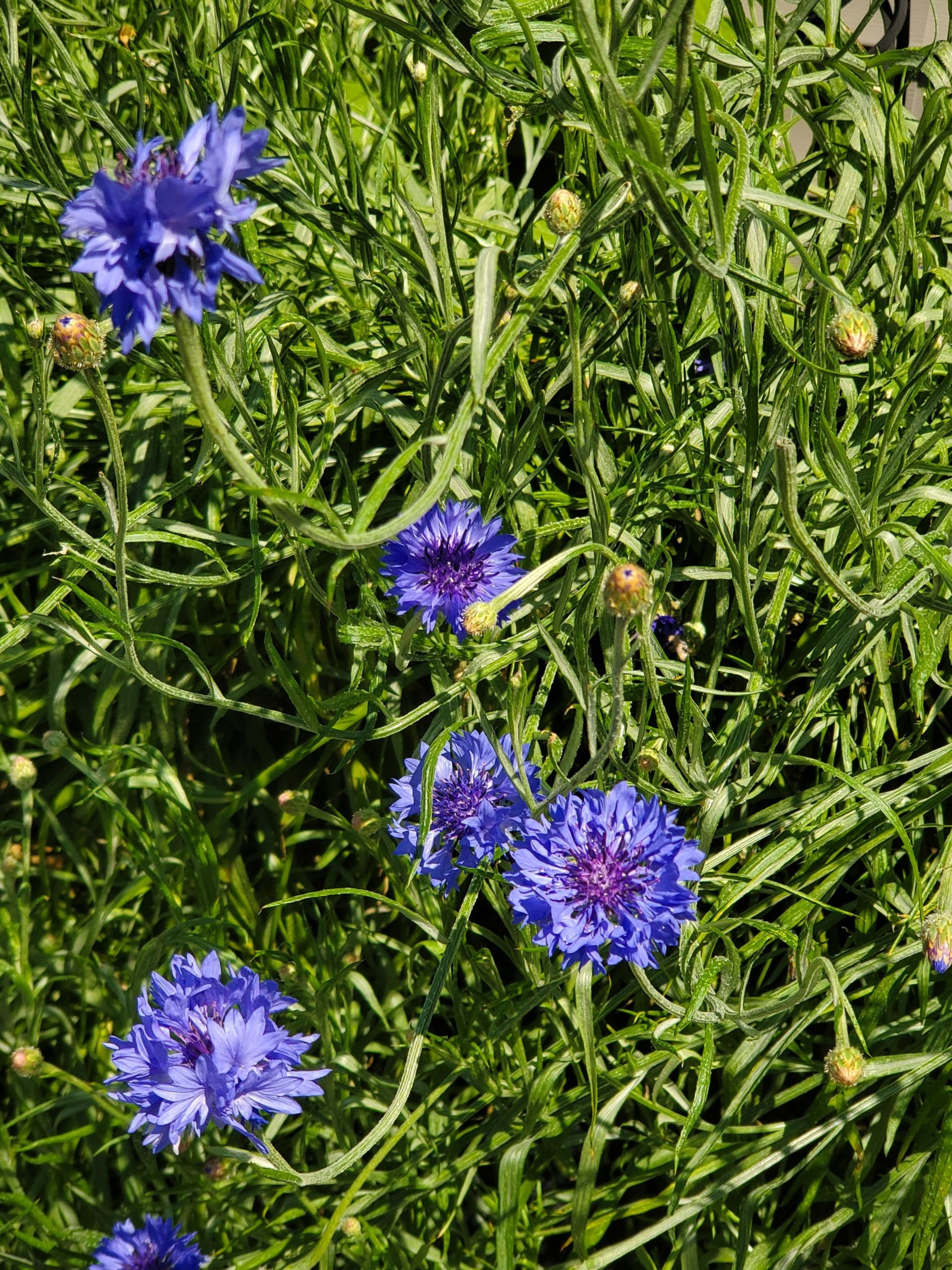
Bachelor’s buttons or cornflowers are easy hardy annuals that in zone 7 can be started in late Summer to early Autumn to get the earliest flowers in Spring. I have had great success using this method. If you are starting them from seed in this manner, you can try broadcasting the seeds directly into your garden. After amending your soil lightly scatter the seeds onto the surface of the soil and water in. Keep the soil evenly moist while the seedlings are germinating and growing on. Once the plants become established, water regularly. As a cut flower it lasts about week or longer. Bachelor’s button’s can also be air dried to add to an everlasting bouquet.
To start bachelor’s buttons in early spring, you can do so inside. These plants do not need cool temperatures to germinate. Depending on the variety of seed and temperature they will germinate in 7-14 days. The ideal temperature to start them is between 60-75 degrees Fahrenheit. After the seeds have germinated continue to water them. When temperatures are about 45 degrees and your seedlings are a decent size start “hardening off” your plants slowly. To harden off your plants, bring them out daily for an hour at a time, increasing the length of time in small increments until they are fully “hardened off”. Plant them out in your garden in amended soil. They prefer to be in part to full sun. The petals are edible and make a beautiful garnish for your salads.
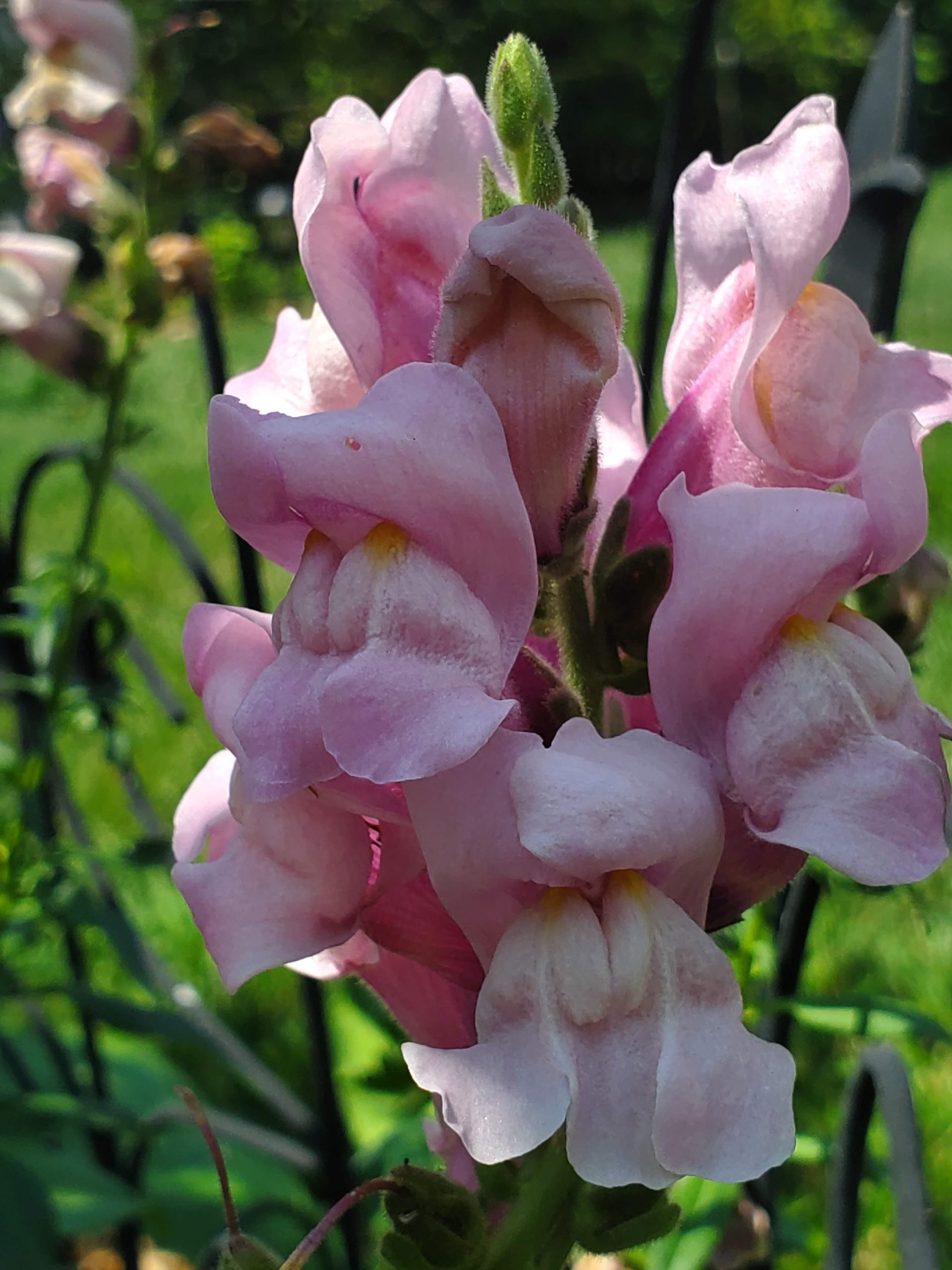
Snapdragons are hardy annuals that can perform well from Spring to Fall. The taller varieties make great cut flowers that can last in your vase anywhere from a week to 10 days. Snapdragons are beloved by bumblebees and children alike. The flower petals are also edible. Why do children and the young at heart like Snapdragons so much?
You can start your snapdragon seed 8-10 weeks before your last frost. They germinate best at temperatures of 70-75 degrees Fahrenheit, light is required for them to sprout, so don’t cover the tiny seeds with soil. You can Harden them off when outdoor temperatures at 50-55 degrees at night. When the seedlings at about 4″ to 5″ tall you can pinch them back in order to have more flowers. Snapdragons can handle part to full sun. They like a fertile soil that is highly amended with compost. Harvest the flowers when about 1/2 or more of the flowers on the stalk are open. The flowers should last about a week in the vase with a flower preservative.
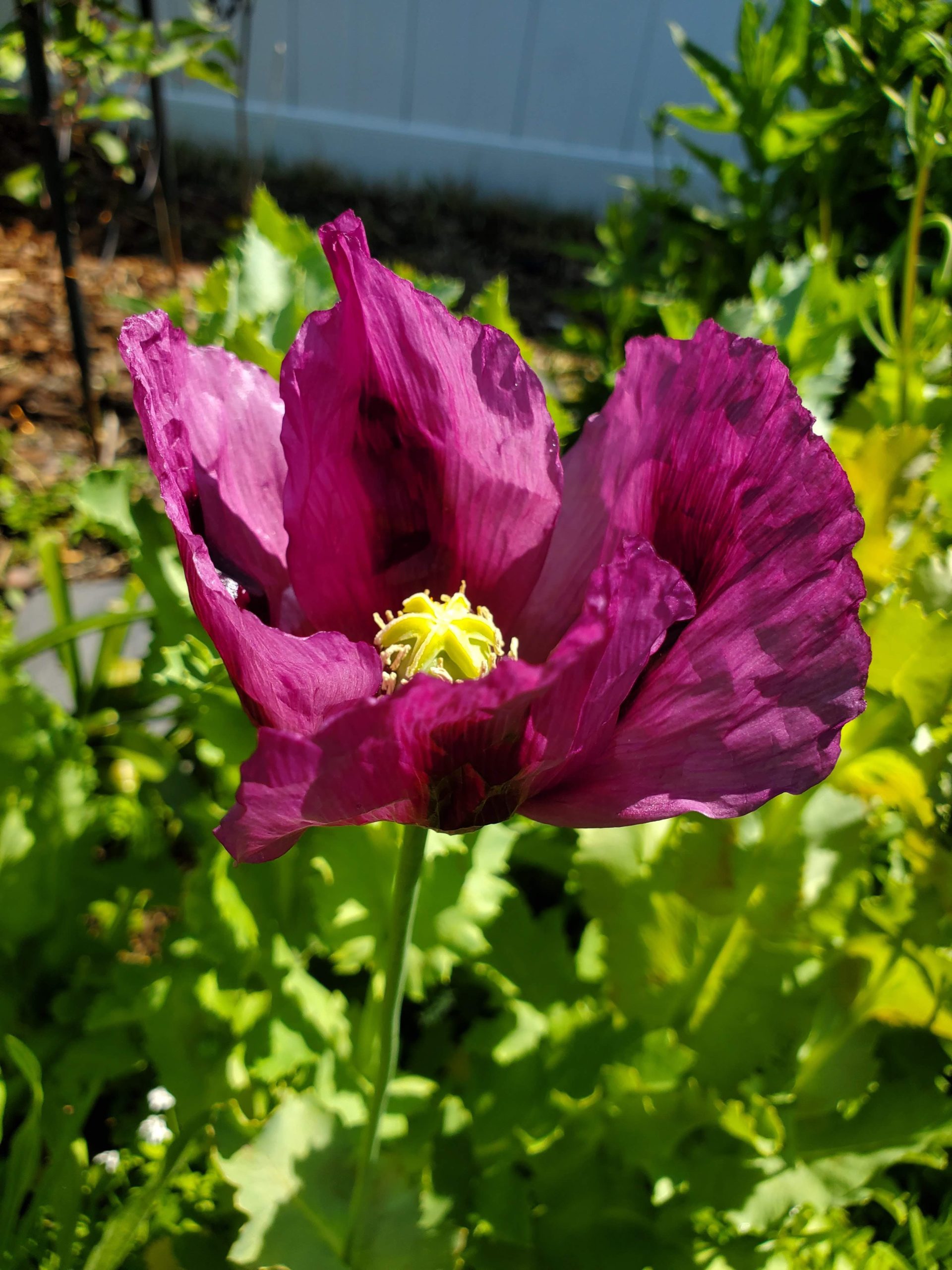
Icelandic poppies with their fragile crepe-like appearance are another cool hardy annual that can be grown from seed. They are lightly fragranced and make for a delicate bouquet. Iceland poppies are slow to germinate, taking 2 to 3 weeks! As Alton Brown says, “Your patience will be rewarded”!
Icelandic poppies should be started indoors at about a temperature of about 70 degrees a month to month and a half prior to your last frost date. I highly recommend using peat pots or Jiffy peat pods as Iceland poppies do not like to have their roots disturbed. When they are an inch or taller, plant them out into the garden. Icelandic poppies can also be started in the garden in the Fall. Personally, I have never had any luck with that, as the seeds are so tiny and are more likely to be blown away, then to germinate and survive the onslaught of slugs and snails. Because the seeds are so tiny and light is required for germination don’t cover the seeds. Set them out 6-10 weeks before your last frost. All poppies fizzle out once the temperatures become too warm to produce more flowers.
Icelandic poppies ooze a toxic sap once cut. In order to use them as a cut flower, sear the end the cut stem to prevent them dirtying your vase water. The delicate beauties last about a week in a vase.
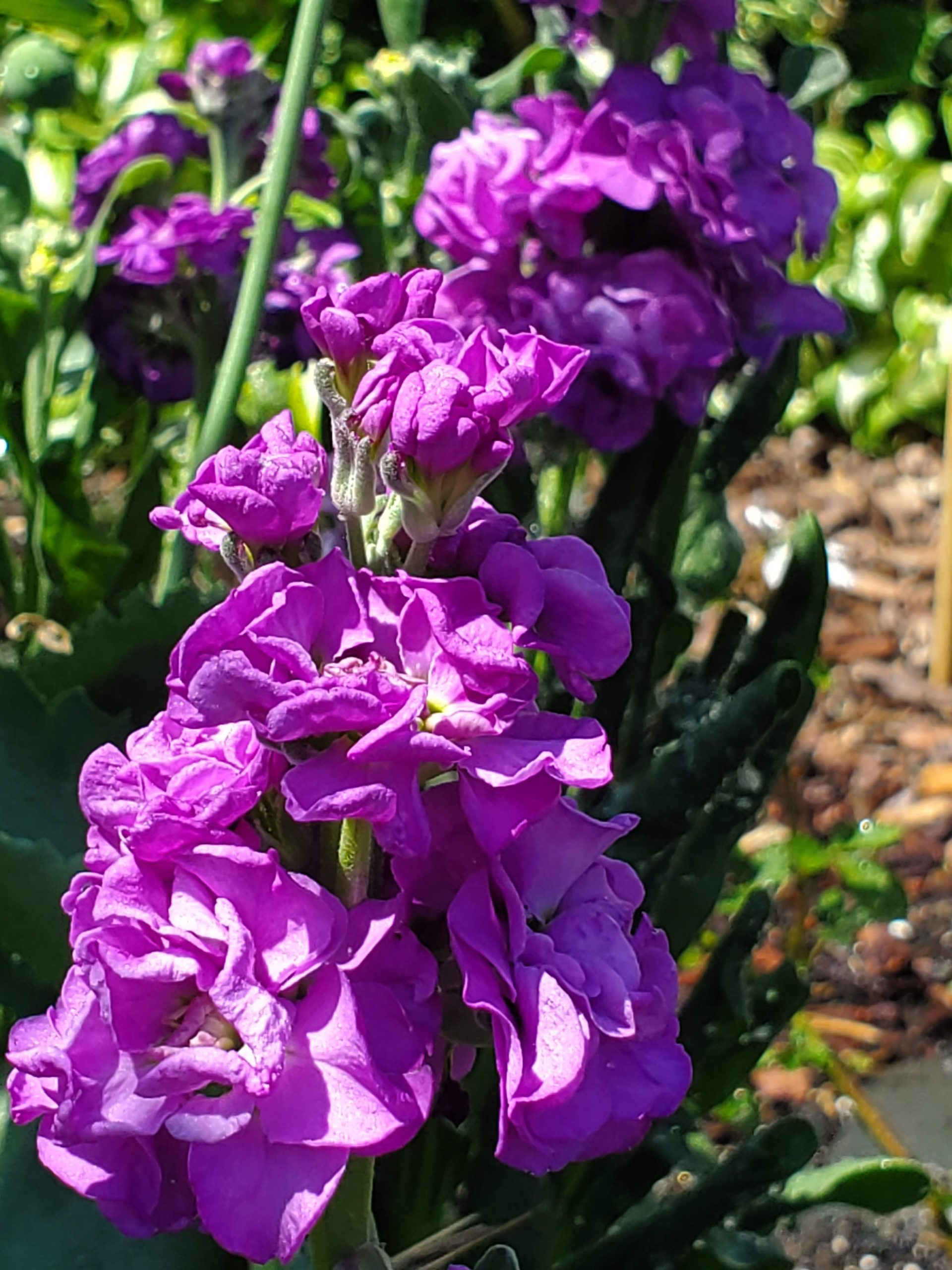
One of my favorite cut flowers is (I’m a slut for anything scented) Stock. Not only does it have a heavenly scent it comes in a wide range of colors on thick stems. The clustered flowers come in a range of flowers including red, different shades of violet, pink, blue or white. Stock is a hardy annual and grows best when outdoor temperatures stay below 75 Fahrenheit and when night time temperatures of below 60 Fahrenheit. Start annual Stock (Matthiola) 6-8 weeks before your last frost, sowing the seed on the surface of your growing media, it requires light to germinate and can take up to 21 days to germinate. Keeping your grow media moist will ensure better germination rates. When transplanting out, plant in richly fertile. Stock prefers a sunny location except where it get hot, if that’s the case transplant them into dappled shade.
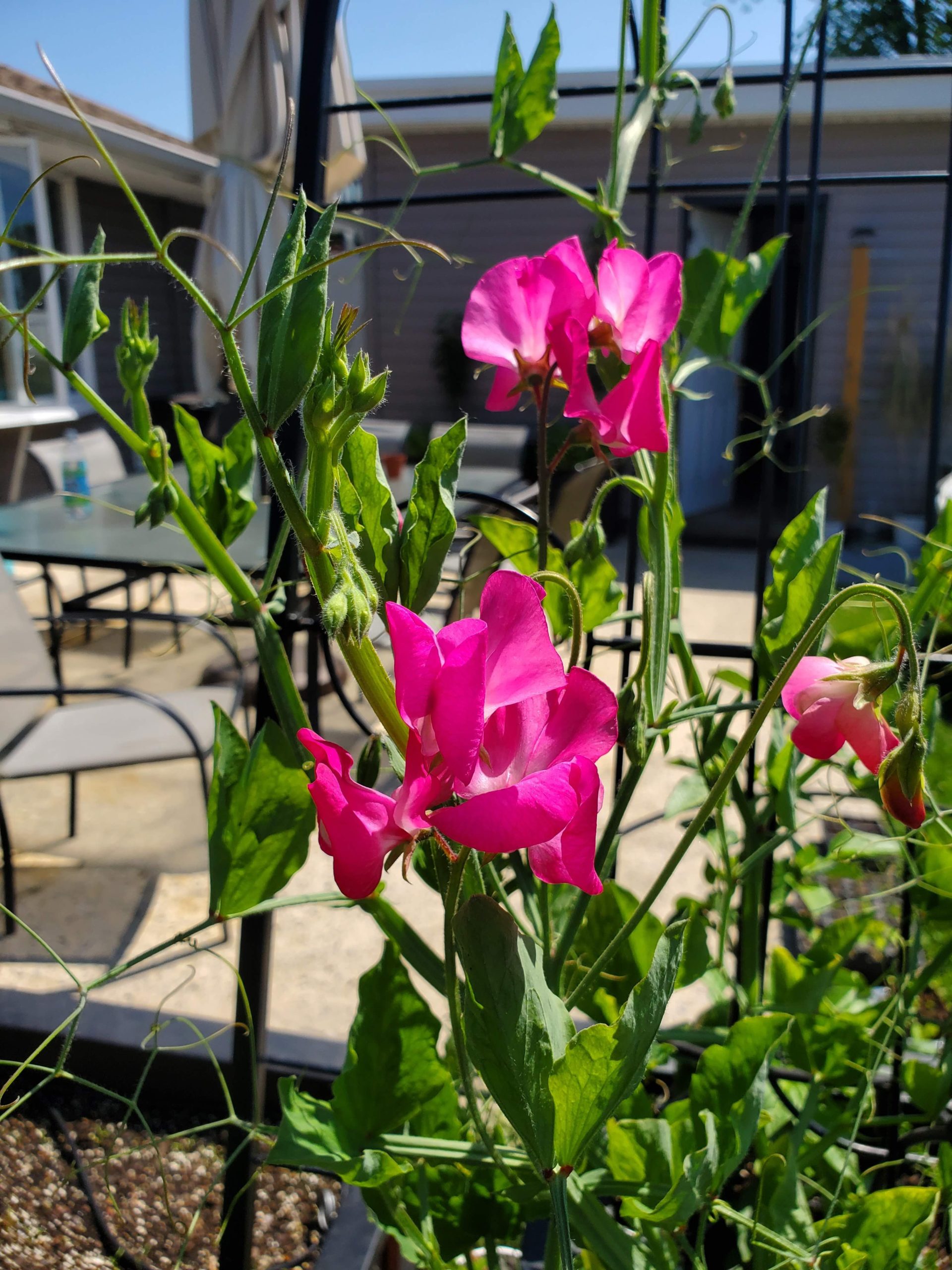
Sweet peas (Lathyrus) are climbing plants, that have butterfly shaped, mostly scented flowers. Although these flowers do not last very long in a vase, up to 5-7 days. These flowers come in shades of white, red, violets, pinks and even peach colored varieties. These flowering vines can reach up to 8-10 feet tall. Start these flowers by first soaking the seeds in warm water for about 2 hours, this will aid in germination and then plant into your growing medium. Covering the seeds with about a 1/4″ of growth media, keep the media moist. Set them out when night time temperatures are about 45 degrees Fahrenheit. You can also try growing them in fall. What plants do not get wiped out by the winter frosts will be stronger and more vigorous. I grow my sweet peas this way, covering them with a protective fleece cloth row cover. With this method you will get flowers sooner then if you transplanted in the early spring. Picking the blooms during the growing season will result in increased yield of flowers. Sweet peas like rich, fertile soil. Mulch the plants to keep them cool. In places were summers are hot try growing them in dappled shade.
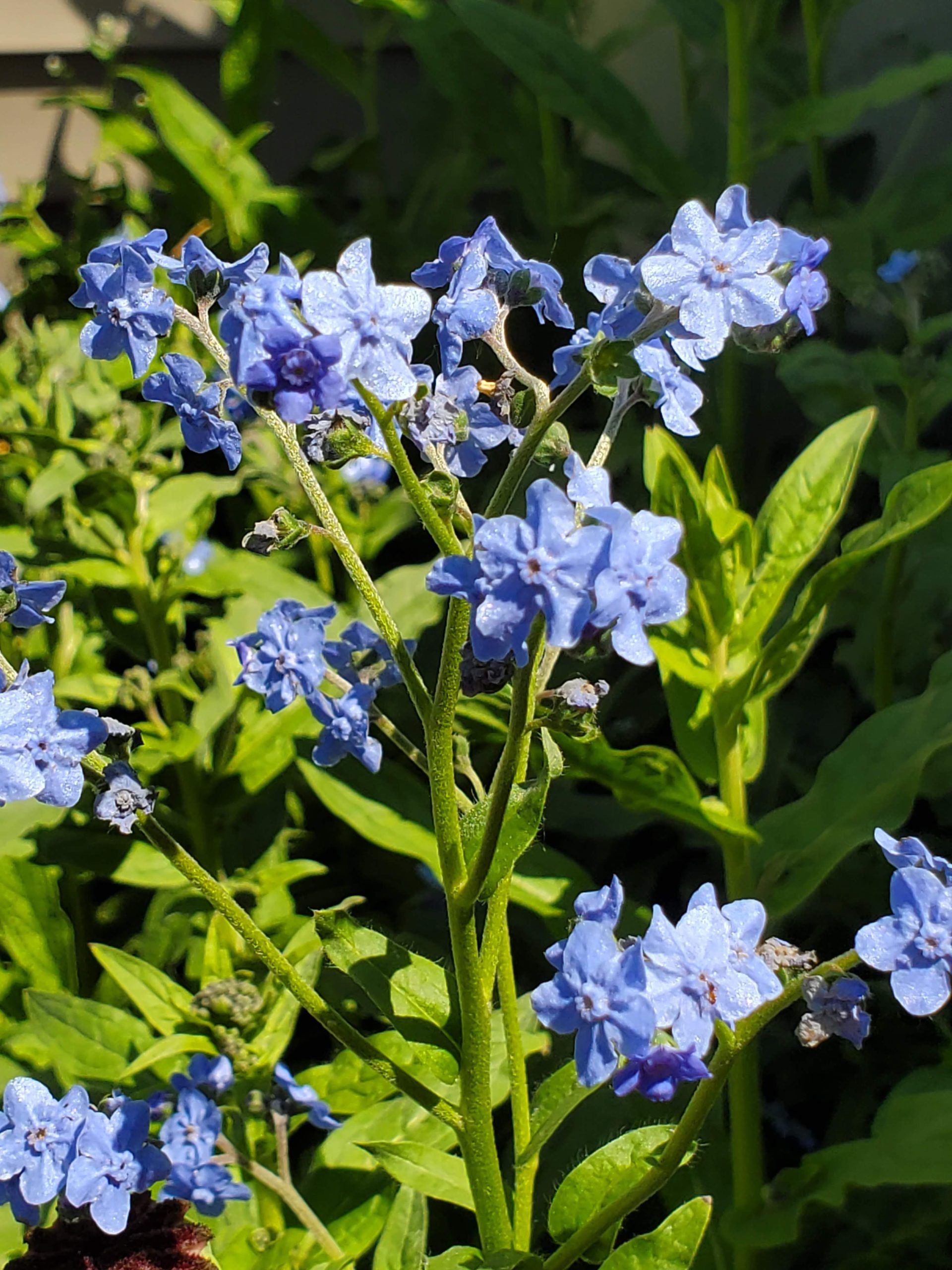
Chinese Forget-me-nots are a spring blooming annual that are pretty close to true blue as you can get. These flowers are also irresistible to pollinators. Sow the seeds 6-8 weeks before the last frost. At temperatures of 65-75 degrees Fahrenheit, seedlings should come up within 5-10 days. Cover the seeds with 1/4″ seed starting media as darkness aids in germination. Transfer into it’s preferred spot of sun to dappled shade in areas with hot summers. It likes moisture, so this a a great flower near a down spout. Cynoglossum, or Chinese Forget-me-nots can self-seed prolifically and in Utah some species are considered invasive. I plant mine near the down spout between some slabs of concrete so I do not find it hard to control. When the Cynoglossum starts looking shaggy, simply rip them out and replace with warm annuals. As a cut flower it lasts a long time in the vase, as each spent/old flower is dropped and replaced with another new flower. The issue with Cynoglossum is just that, it sheds it’s old petals, so don’t put it on grandma’s heirloom lace tablecloth or doilies.
Honeywort or Cerinthe is usually grown as an annual. This plant has tubular flowers that come in shades of violet and blue. The flowers look like wands with bells and it makes a great filler and can last 7 to 10 days in a vase. When cutting them, be sure to harvest this and all flowers in the morning, as that is when they contain the most water. After harvesting, place the stems into scalding hot water, then place in cool room in cool water to recover. Add flower food. Before sowing your seed, refrigerate for 2-4 weeks then grow on at 65 to 75 degrees Fahrenheit. Sow Cerinthe at a depth of 1/16″ 6 to 8 weeks before your last frost date. If you live in an area where summers are hot set out in part shade to protect against the blazing hot sun. It likes moist, fertile soil that is slightly alkaline. Mulch to keep the roots cool. Honeywort as the name implies is irresistible to pollinators.
As with all cool season annuals, mulch to keep the plants going as long as you can. Once the plants become raggy looking simply pull them out and replace with annuals that thrive in warmer weather.